

Advertising disclosure. I may earn a reward if you sign up through my Freecash referral link (ad) and meet the offer conditions.
I pay about US$100 a month for ChatGPT Pro to build and maintain my AI projects. WordPress hosting and my domain are another £47 a year before tax. Most of that comes out of my pocket. Freecash helps me put a little back. In October and November 2026, I made two withdrawals worth £19.48 at the amounts Freecash recorded. That’s a little over 40% of my annual WordPress and domain bill before tax, which gives you an idea of why I bother with the small rewards.
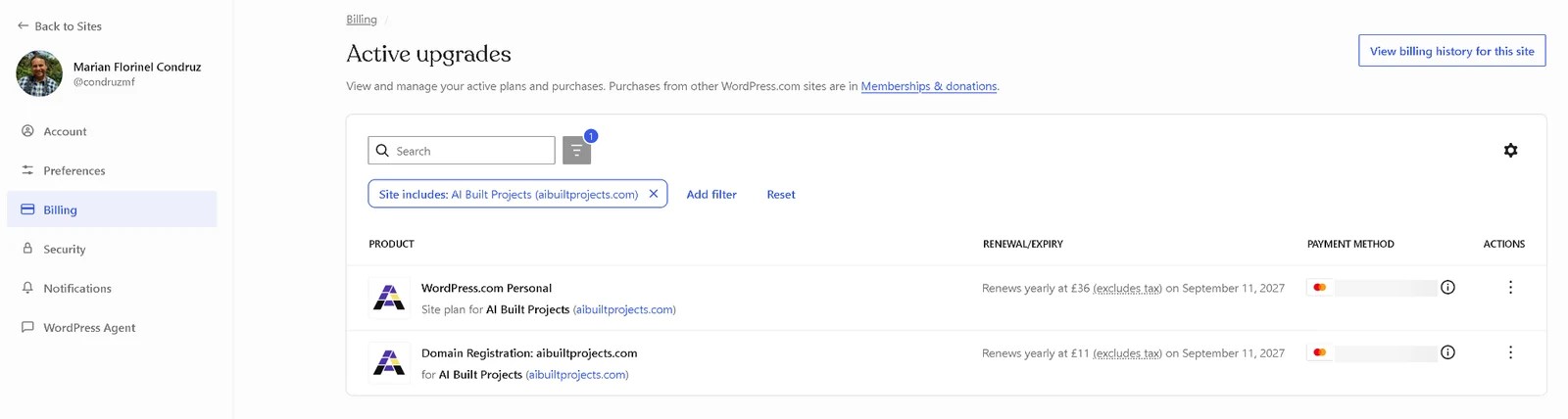
One of the games those bills help me keep online is Gem Forge Idle, where you mine rough rock and cut the stones you find. This is my closer look at the Freecash side of that project budget. I’ll show what I pick, how long my daily routine takes and what has actually reached my wallet.
How I pick the offers I’ll actually play
I start with games I’m interested in. The desktop, Android and iOS filters help me narrow the list to the device I want to use. I also use the search field if I know which game I’m looking for. The offers on that first screen are suggestions. Before I install anything I open its details to see what counts and how long I have to do it.

Once I’ve started a game, I usually go back through Continue Earning instead of scrolling through the whole catalogue again. On the same page, Highest Rewards and More Offers are places to browse. The large figure on a game card is the advertised offer amount. My own credits depend on which milestones I meet, so the task list is where I decide if it suits me.
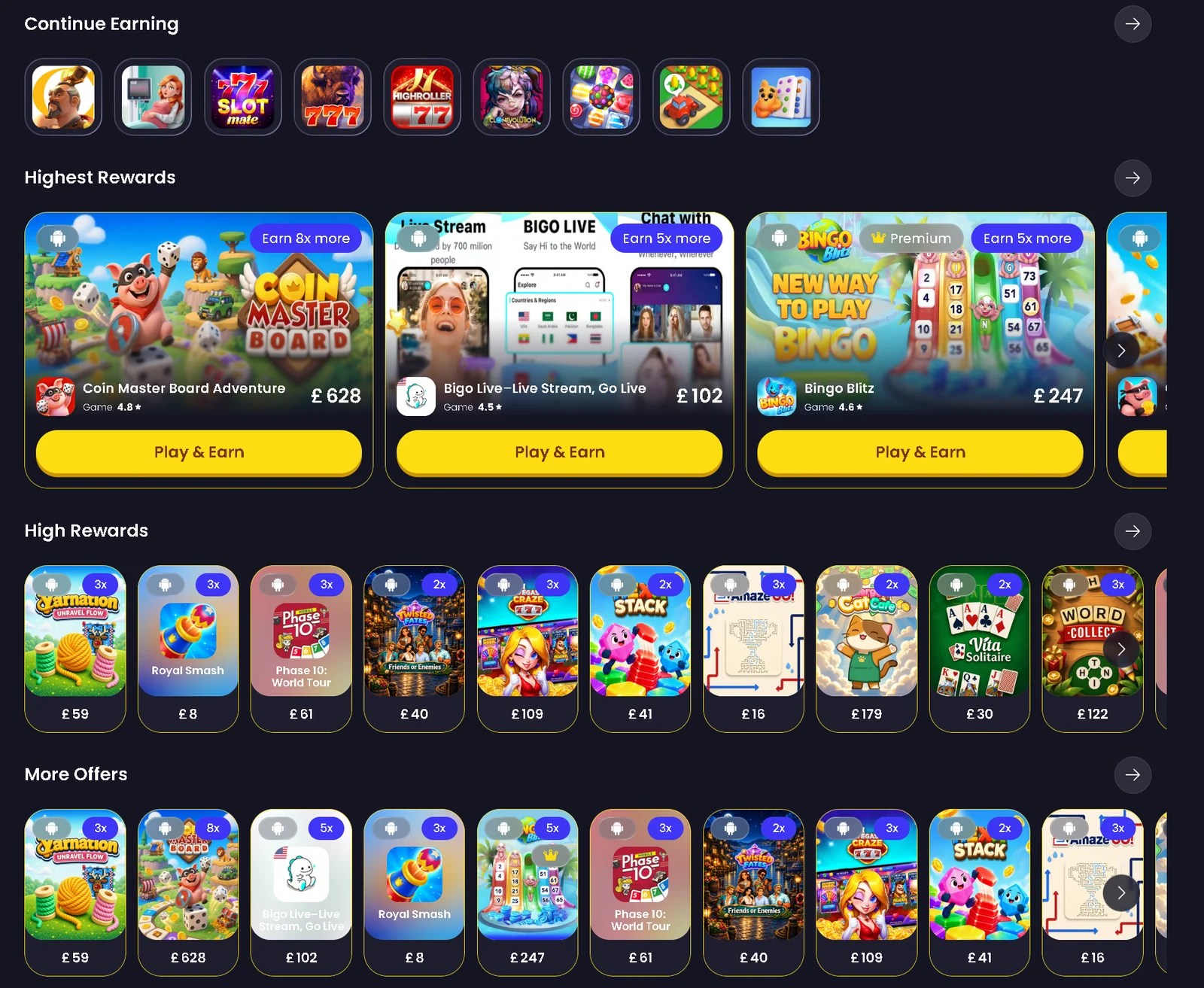
Freecash also lists surveys and third-party offer partners. On my account, the survey section asks for consent before it matches me with surveys. The partner cards give me another place to look for an offer. Games are what I focus on here, because picking one I’ll actually come back to is how I keep my routine short.

My one-minute routine
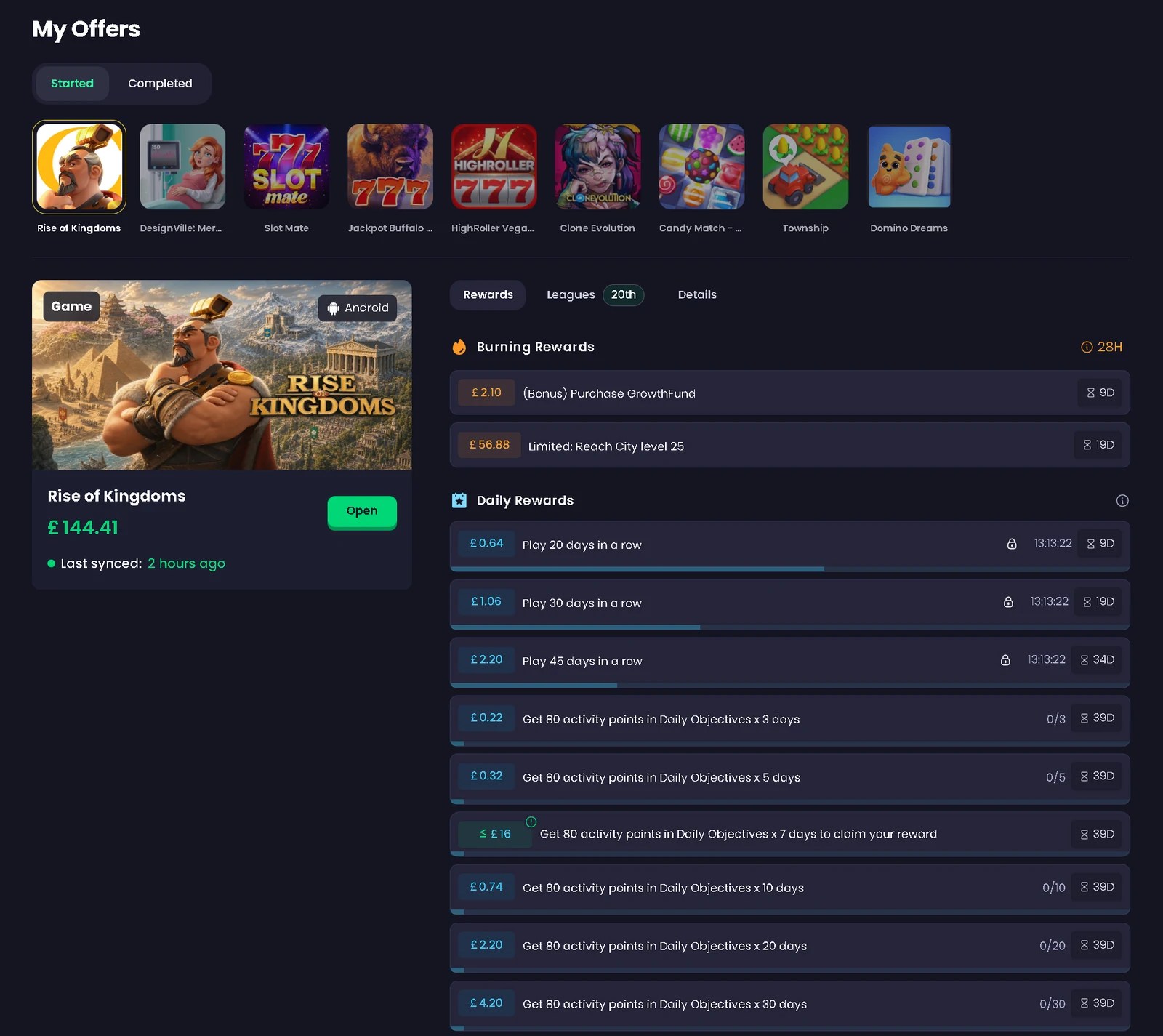
I spend just one minute a day on Freecash. I pick offers that reward me for playing a little each day. Rise of Kingdoms, for example, has rewards for playing seven days in a row and again at 30 days. For me, a minute of play is enough to tick off that day’s activity and enter the lottery draw.
In November I earned £0.17 for reaching seven days in a row and £0.26 for reaching ten. I can check the next milestones in My Offers. There are goals for 20, 30 and 45 consecutive days on this offer, as well as daily activity objectives. The timed city-level task and the Growth Fund purchase bonus are separate. My one-minute routine is about the daily play activity. I read the conditions before taking on a goal that asks for more.
I check the streak panel to see whether that day counts. Mine was at 224 days on 18 November 2026. The panel gives me qualifying games as well as the option of earning a small reward. For a different account or a different game, I’d check the instructions in that account before assuming the same quick session counts. Freecash explains how eligible games and daily credits work in its streak rewards guide.

I also check the weekly draw through the ticket icon. I had 1,042 tickets when I took that capture. The leaderboard band is about where my ticket count stood, and the prize table shows what was on offer in that draw. I count the credits and withdrawals when I work out my budget. Potential prizes stay out of that calculation. The Freecash lottery rules explain how tickets and weekly entry work.

My rewards and what I’ve actually withdrawn
By 18 November I had £117.28 in lifetime rewards on Freecash. The same profile shows the smaller credits that make up my activity, including my two consecutive-play rewards and bonus credits. When I complete a task, I go back to the offer to see whether it credited or is waiting for me to claim it. If it’s pending, I wait for it to clear before counting it as available. Freecash explains the difference in its guide to claiming offer rewards.

My referral rewards stood at £2.13. I check them in the referral panel, separately from my own game milestones. In November the invite page also had a promotion that separated the initial qualifying game activity from the extra reward tied to a cashout. Another card showed a friend streak quest. I check the live terms of those offers before quoting a bonus to anyone, because the steps matter and promotions can change.

The two withdrawals I use as examples for my current projects are the £7.48 I took out on 4 October and the £12 I took out on 11 November 2026. I received both in Dogecoin. I keep the dates and the pound values Freecash recorded, so I can compare them with the bills I pay in pounds. Those two completed withdrawals are the source of the £19.48 figure at the top.

At the time of the screenshots I still had £0.58 in my account. On my Cashout screen, Litecoin and Dogecoin were available at that balance, while Bitcoin was temporarily unavailable. I check the method before I withdraw and use the separate withdrawal history to confirm the transfer went through. That’s the point at which I can put the reward towards a project cost.

Where it fits in my project budget
When I’m working on another update to Swarmloom Idle, I’d rather spend the evening building the game. The habit that works for me is to spend a minute on one of the offers I’ve already started and let the small rewards accumulate. Then I can put a withdrawal towards hosting, the domain or another development cost as it comes up.
If you want to see which games are available to you, here’s my Freecash referral link (ad). I’d start by opening one offer and reading the first few milestones so you know what the game actually asks you to do.
Leave a Reply