
Could I offer a service on PeoplePerHour restoring photos with ChatGPT? I would consider it only if I could show convincing examples and explain what the process changes. An old photograph can be cleaned up, colour corrected or visually reconstructed, but those are not identical promises. A client may be handing over the only surviving picture of somebody important. That deserves more care than pressing Enhance and sending the first attractive result.
Platform information checked in November 2026. The official links below let you check the latest application rules, pricing and AI requirements before you offer a service.
Photography is not a random niche I would select because AI makes it look easy. I have maintained GottaPics for years and have also built Chaos Booth, a playful photo-challenge app. Those experiences give me something relevant to discuss. They do not automatically turn me into an archival restoration specialist. If I were offering paid restoration, I would first build examples for the specific kind of work I intended to accept.
What a service on PeoplePerHour restoring photos with ChatGPT could include
I would separate simple correction from generative reconstruction. Removing a colour cast, preparing a crop or reducing minor visible damage can have clear visual checks. Rebuilding a missing eye or a badly damaged face may invent details that were never captured in the surviving file. I would ask whether the client wants a conservative restoration or a creative interpretation and agree before changing a person’s appearance.
ChatGPT can help me plan the workflow and, through its available image tools, assist with some edits. It is not the only tool a careful editor may need. I would inspect the result at full size, compare it with the original and use appropriate editing software for fine corrections or exact output requirements. I would not sell a promise that one assistant can recover authentic information from any damaged image.

PeoplePerHour reviews freelancer applications
According to the application guide, the process starts with email verification and a profile containing a genuine photograph, accurate location, job title, skills, background and language information. The application is moderated, and the outcome is sent by email. A good profile improves the application, but I would not tell readers that acceptance is automatic because somebody else was accepted.
There is an important distinction in the public documentation: the fees guide says there is no registration fee, while the application guide presents subscription choices. I would review the actual onboarding screen and optional paid selections rather than assume every route or feature is free. I would also complete requested payment and identity checks before relying on a withdrawal method.
Offers and proposals are different routes to work
An Offer is a fixed-price package; a proposal responds to a buyer’s posted project. For my first Offer, I would choose something narrow, such as a conservative clean-up of one photograph after assessing the source image. The Offers policy requires clear inclusions and exclusions and a service deliverable within five days of receiving requirements. It also requires relevant imagery and realistic delivery promises.
That policy says not to send buyers elsewhere for the full service details or put contact details in the Offer. My own portfolio website would help me organise and present my evidence, but the package must make sense on PeoplePerHour itself. For project proposals I would address the actual photograph and the buyer’s intended use, not paste the same restoration sales pitch into every enquiry.
For applications to posted projects, the proposal-credit guide lists fifteen free credits each month; extra credits can be purchased. I would use those selectively on relevant briefs, not assume that applying repeatedly is cost-free or that buying credits will produce a client.
The AI disclosure requirement is explicit here
PeoplePerHour’s Offers policy says to tell the buyer if the deliverable will be primarily achieved using AI. This is more specific than simply assuming disclosure is optional. I would state the AI-assisted workflow in the description and explain how I review the output. A client asking for a manual restoration should not discover afterwards that I used a generative tool instead.
I would also ask permission before uploading private family photographs to an external image service. Faces, children, intimate images and confidential documents need particular care. A client owning a scan does not make every possible use of the depicted people appropriate. For my own examples I would use material I have the right to edit and display, keeping the original alongside the result where permission allows.
Allow for the commission before setting a price
The official fee schedule lists a 20% service fee below £250 lifetime billing with a buyer, 7.5% in the £250–£5,000 band and 3.5% above £5,000, excluding VAT. These are relationship-based bands, not a flat rate for every order. The page also lists a £1 minimum service fee per invoice. I would use the platform’s calculation for the actual transaction.
A hypothetical £30 job charged at 20% would leave £24 before VAT on fees, withdrawal costs and tax where applicable. That figure is a pricing example, not expected earnings. If the source needs hours of careful reconstruction, offering it at the price of a quick correction would create pressure to rush. I would assess the image first and decline work that I cannot do to the agreed standard.
Build a portfolio that demonstrates judgement, not just a filter
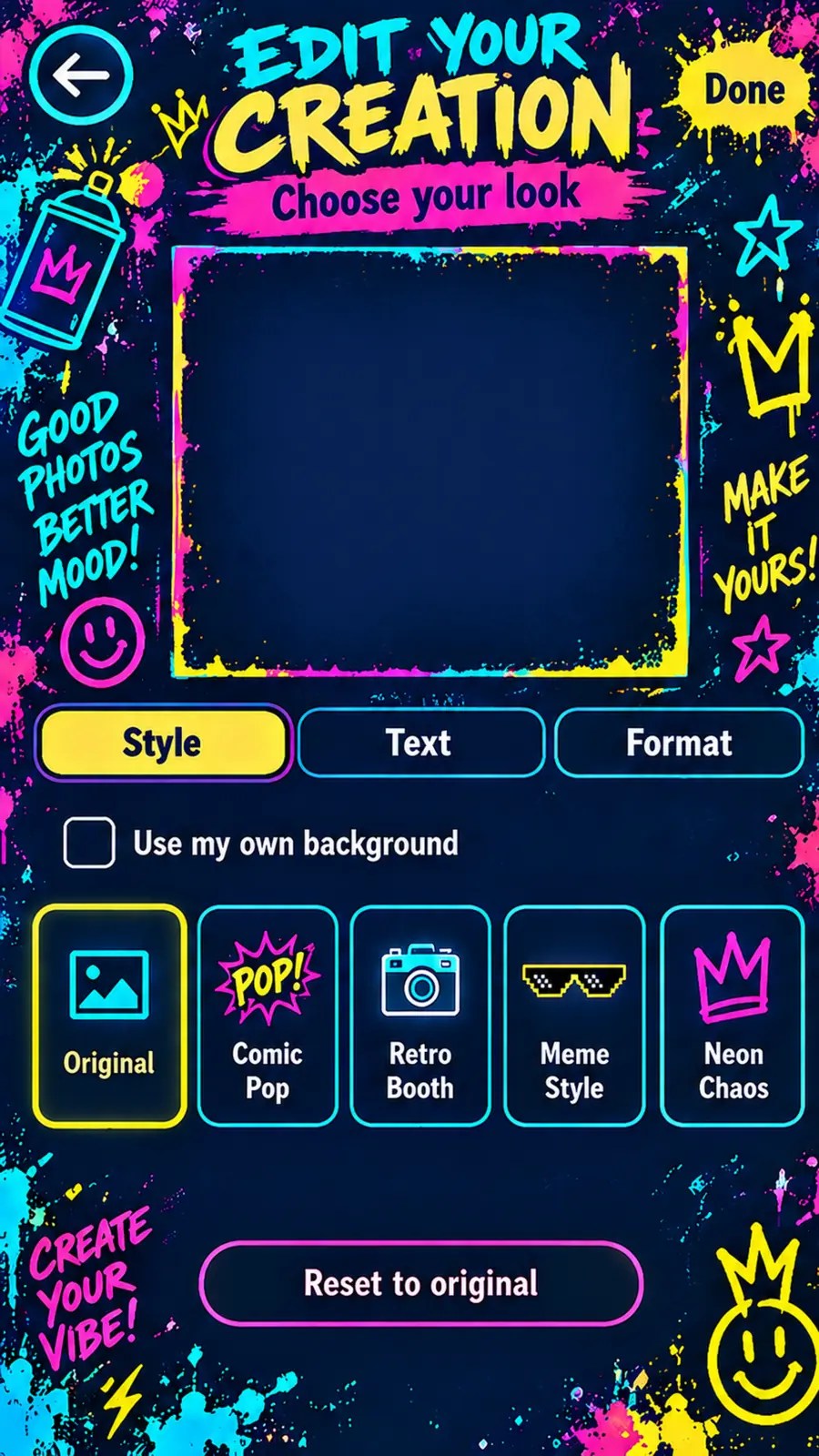
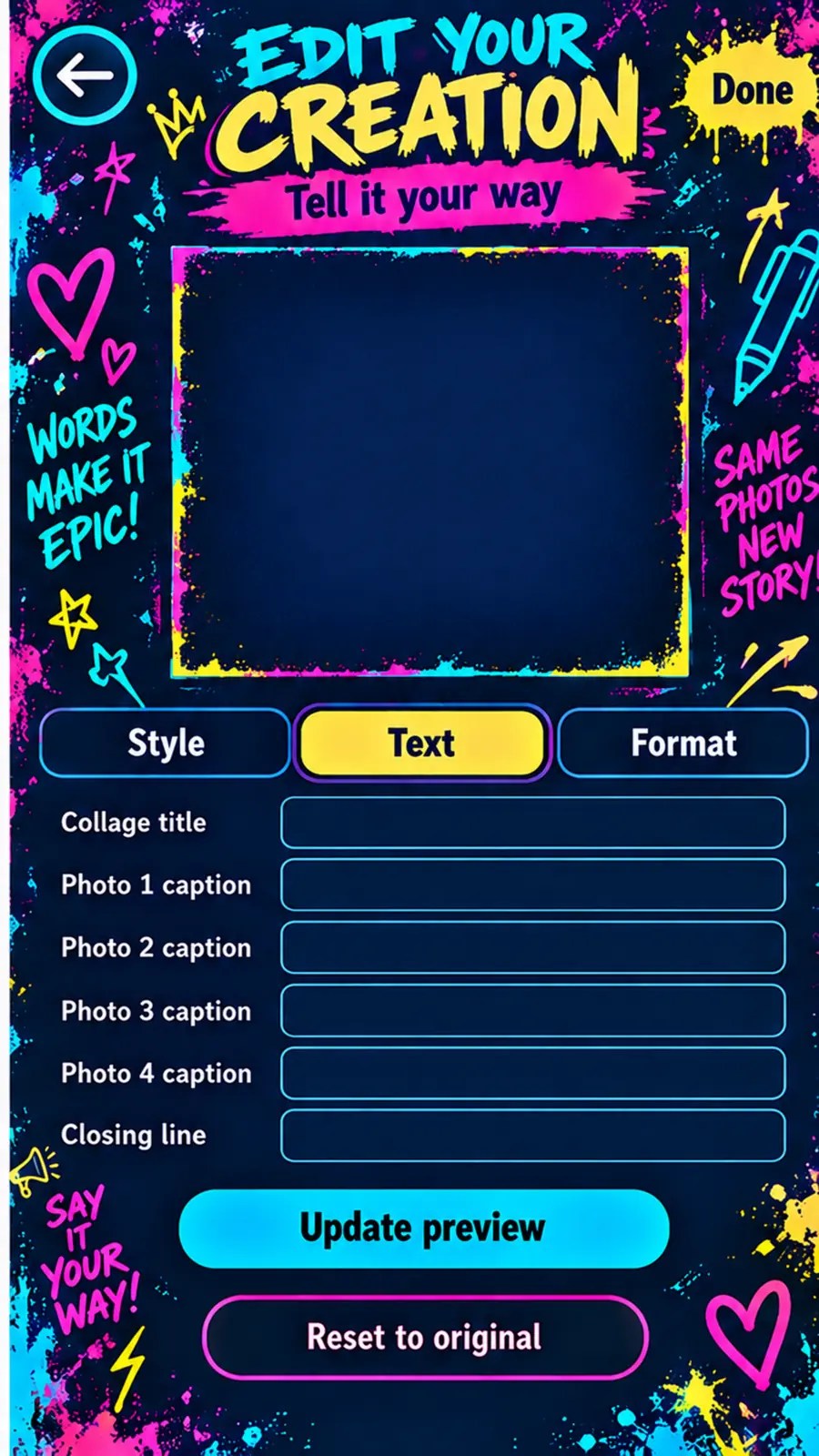
My first portfolio would show several permitted before-and-after examples with short explanations: what was damaged, which changes were conservative and which details were reconstructed. I would avoid claiming the missing content is historically exact. For broader app work, I could also show Chaos Booth’s capture, collage and editing flow, clearly separated from restoration samples.
You can also inspect Chaos Booth on Google Play. I would describe it honestly as my photo-challenge and collage app, showing the relevant flow rather than presenting it as evidence of every possible image-editing service.
If someone wants a wider AI-assisted portfolio, two or three small games and one app can show different skills. Mine include Gem Forge Idle, Swarmloom Idle and Chaos Booth. A WordPress page can collect screenshots, videos and a case study for each. Personal starts at US$2.75/month with three years prepaid, before tax; check local checkout. I would choose the simplest presentation that makes the examples easy to inspect.
A game such as Gem Forge Idle on Google Play demonstrates a finished release, not photo-restoration expertise. Google Play developer registration costs US$25 as a one-time fee. There is no need to publish an unrelated Android app merely to sell competent image editing.
What I would want the client to receive
Before delivery I would check faces, edges, hands, text and repeated patterns for unwanted changes, then export the agreed size and format. I would preserve the original and make the revision limit clear. If a promised improvement is not achievable from the source, I would say so before accepting the job. Restoring confidence in the service matters as much as making the file look brighter.
So the opportunity is not “AI restores everything and I collect the payment”. It is a carefully described image service, an honest portfolio and respectful handling of somebody else’s photographs. ChatGPT can be part of that process. The responsibility for what I promise and what I hand over remains mine.
Built with AI. Directed by human.
Leave a Reply