
October brought a small but important change to my AI experiment: the games were no longer only things I was building. They were reaching players, receiving feedback and beginning to generate a little advertising income.
The amount was small. My AdMob dashboard showed £2.31 in advertising earnings for October. That did not cover the cost of making and promoting the projects, but it was a real step beyond having an idea and hoping it might earn something one day.
The early earnings
When I checked AdMob on 3 November, the “Last month” figure was October’s £2.31. The dashboard also lists Gem Forge Idle, Swarmloom Idle and Gems of Luna in its rolling 28-day view. October’s own total is the £2.31 in the card above it.

Seeing Gem Forge Idle, Swarmloom Idle and Gems of Luna appear in that dashboard meant more to me than the size of the total. It showed that the advertising side was starting to work. The next challenge was getting people to discover the games and giving them a reason to keep playing.
Getting Gem Forge Idle in front of players
Gem Forge Idle moved through testing and into its public Android life during October. Meanwhile, I kept improving the visuals, the interface and the journey from mining raw material to collecting finished stones.

A lot of the work was about making the systems understandable. There is a difference between having rough specimens, a protected vault and faceting machines in the code, and making a player understand why those things are useful.
The browser adaptation added another set of practical concerns. A build that works on my computer still needs to load correctly on its platform, fit the screen and preserve progress. AI assistance helped me work through those tasks; it did not make testing optional.
Swarmloom became a much bigger game
Swarmloom Idle grew from its late-September beginnings into a game with 20 insect species and several layers of progression. Android and browser versions brought the same garden-invasion idea to different places.
Player feedback also became part of development. People pointed out prices that were difficult to read and too many clicks when buying large quantities. The Kongregate update I published on 31 October included x100 purchases and changes to what players keep after certain resets.
That is the kind of progress I want to show in this series: someone plays, finds a problem and gives me something specific to improve. A new feature is useful only if the game around it is worth playing.
Gems of Luna and a different kind of app
Gems of Luna has a different starting point. I bought an existing match-3 project and paid freelancers for additional levels before the AI-assisted transformation. I did not build its original engine from scratch.
The project developed into a more individual game through new artwork, interface work, expanded puzzles and an illustrated story discovered by playing. That mix of purchased foundations, human decisions and AI assistance belongs in the experiment too.
October was also when I began building Chaos Booth, a creative photo-challenge and collage app. Its first version was designed without ads or in-app purchases, so I am not treating every project as the same kind of income source.
What I was paying for
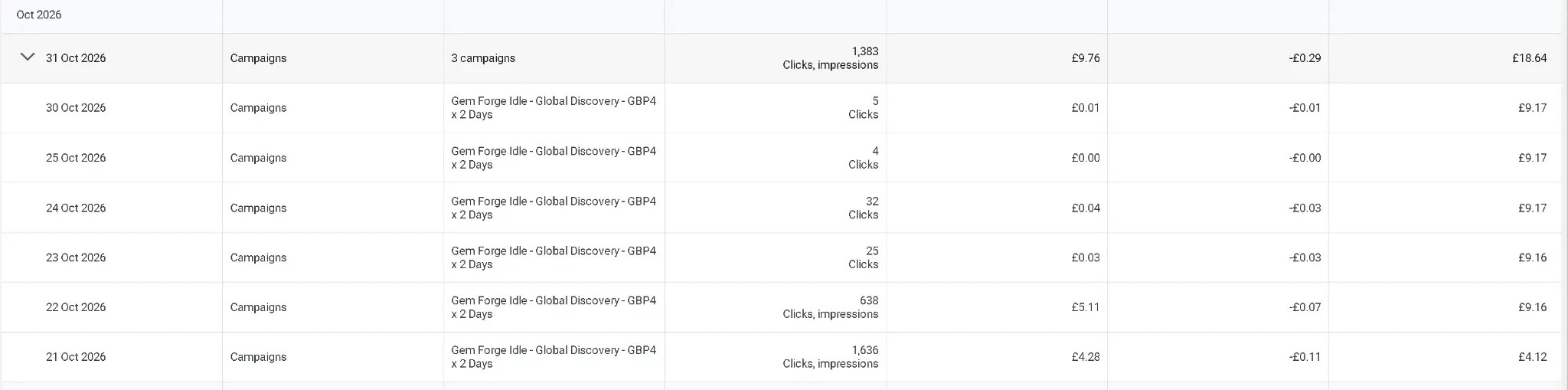
Keeping the work moving meant £89 for Pro, £43.08 for testing and tips, and an October advertising bill of £18.64, settled on 1 November. Together, those October costs came to £150.72.
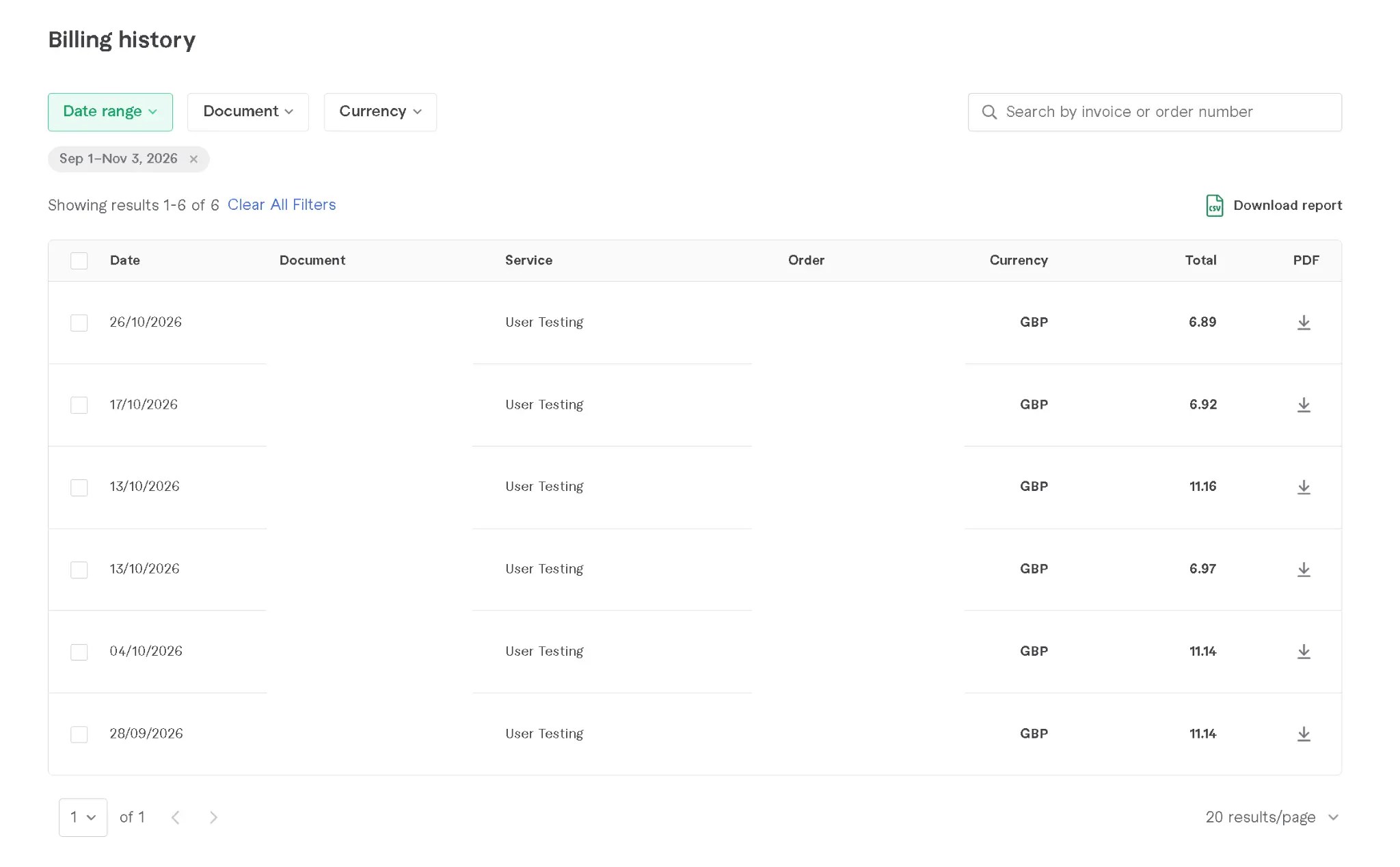

There was a frustrating detour with the subscription. I renewed, found that the usage limit had not reset as I expected, asked for my money back and subscribed again. One £89 payment was fully refunded, so I count only one £89 subscription in October’s total.
The simple comparison is that I was spending far more than the games were earning. I was paying to develop, test and introduce them to people; the advertising income was still only a few pounds.
What I take from October
October ended with £150.72 spent on the subscription, testing and advertising, and £2.31 generated by game ads. That left £148.41 more going out than coming in. It was a small beginning, but it was a beginning: the projects were reaching people and the games were producing their first advertising revenue.
Now I want to improve the experience, reach more genuine players and see how the numbers develop over time. I will keep the small beginning visible instead of replacing it with a story that starts only after things look successful.
Read the full experiment, look back at September’s foundations.
Try the current Android games
Gem Forge Idle · Google Play
Swarmloom Idle · Google Play
Gems of Luna · Google Play
Directed by human. Created with AI assistance.
Leave a Reply