
Eighteen days after I launched Gem Forge Idle on Google Play, its first paid orders came in. Three of them showed up on 4 November. A fourth followed on 7 November, exactly three weeks after the public launch on 17 October 2026. By then, two people had bought four items between them. The Google Play Console put the total at £8.26 in estimated gross revenue. I was delighted.
I’d spent a lot of time looking at this game from the developer’s side. I knew the early rocks, the upgrades and the little decisions that went into making the mine feel like a place worth coming back to. Once the game was public, someone else got to decide whether they wanted to spend their evening in it. And then someone chose to spend real money on it, too. That’s what made the first sale feel different from anything I could see while testing the game myself.
What people did once they got into the mine
The sales caught my attention, but I was just as curious about what people actually did in the game. You start by breaking rocks, collecting what drops and deciding where to put your Gold. A Damage upgrade makes each hit count for more, while a Speed upgrade changes the pace. As you unlock new rock tiers, the mine starts giving you different things to look for. Prestige comes later and gives you another decision to make about how you want to progress.
In the Firebase Analytics report covering 11 October to 7 November, I saw 164 session starts from 86 observed Android users. Of those users, 80 triggered at least one journey progress event. Sixteen reached a Damage or Speed upgrade milestone, 14 unlocked at least one new rock tier, and five completed at least one Prestige. Those figures come from the activity Firebase measured during that reporting window.
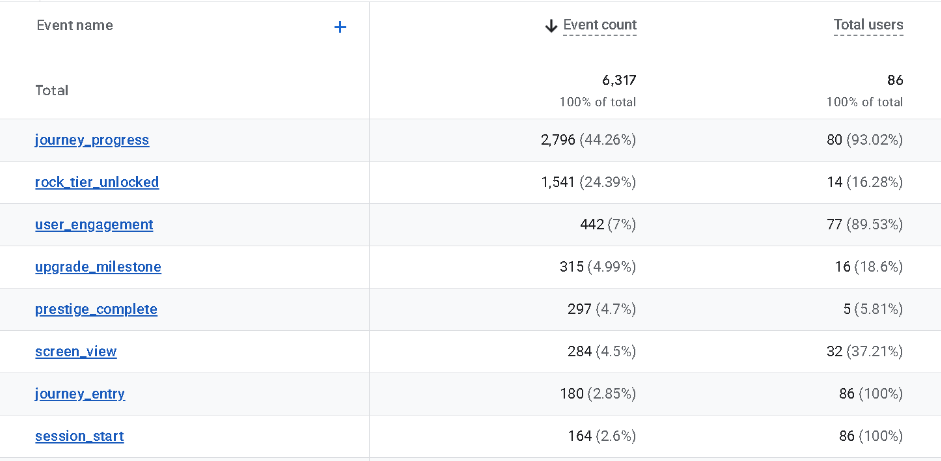
The five players who reached Prestige were the ones I was especially pleased to see. I had written about building the loop from mining to Prestige before the launch. Back then, I was explaining how I wanted the parts to fit together. Here I could see that people had gone far enough to try it for themselves. I still have questions about the journey, especially how clearly the early game shows what comes next. Having actual play to look at gives me a better place to start.
I keep coming back to the rocks themselves. I wanted the moment just before a rock breaks to make you curious about what might be inside. That curiosity can carry you for a while. The next step also has to make sense, whether that means saving for an upgrade or working towards a new tier. Those are the details I want to get right as more people find the game.
What the first four orders meant to me
Google Play recorded two purchases of the Legendary Pickhammer, one of Permanent Double Damage and one of Remove Ads. The Pickhammer can only be bought once per account, so seeing it appear again on 7 November was a lovely detail. It meant a second player had chosen that same item. I’d been pleased when the first orders came through on 4 November. Seeing another person make that choice a few days later made the week even better.

For anyone curious about the numbers, £8.26 is the estimated gross amount shown in the Play Console. The report showed four orders and zero refunds through 7 November. I’m keeping those figures separate from the Firebase activity. What I can say with confidence is that two people bought something in those first three weeks, and that I saw other signs of players spending time with the game and getting somewhere in the mine.
When I think about why this milestone mattered, I keep coming back to the fact that the purchases were optional. People could go on mining for free. Two of them saw something they wanted and chose to pay for it. For a game with a small early audience, that’s an encouraging sign. It gives me a reason to keep improving the game and to pay attention to the parts that make people want to stick around.
Thank you for giving it a go
I’m glad I wrote down the date of the Google Play launch. Three weeks later, I had something I could put next to that date in my development journal. People had started runs, found their way into new rock tiers, reached Prestige and made the first purchases. I’ll be able to look back at this entry and remember what that beginning actually looked like.
If you’ve played Gem Forge Idle, thank you for giving it some of your time. And if you were one of the people who bought something, thank you for choosing to support it this early. I made this game because I liked the idea of breaking open a rock and wondering what might be inside. It’s been genuinely nice to see other people spend time in that little mine, too.
If you’d like to take a look, you can play Gem Forge Idle in your browser or find it on Google Play.
Leave a Reply